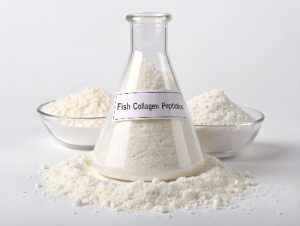
As a formulator, brand developer, or sourcing manager in the cosmetics or nutraceuticals space, you already know that "collagen peptide" is a hero ingredient. It’s the backbone of countless best-selling anti-aging serums and dietary supplements. But to innovate, source effectively, and make credible claims, you must look beyond the marketing hype and truly understand the substance itself. Answering the question, "What is collagen peptides made of?" is the first step toward technical mastery.
This definitive guide will take you on the complete journey of this powerful ingredient—from its raw animal origins to the highly functional, water-soluble powder that lands in your lab. We will deconstruct the manufacturing process, compare the critical sources, and clarify the technical jargon, empowering you to make superior formulation and sourcing decisions.
The Fundamental Difference: Collagen vs. Collagen Peptides
Before we explore its origins, we must address a point of common confusion, even among industry professionals:
what's the difference between collagen and collagen peptides?
Think of native, raw collagen as a thick, incredibly strong rope made of three long protein strands twisted together (a triple helix structure). This rope is what gives skin its structural integrity. However, in this native form, the rope is too large and dense for the body to absorb and use effectively, whether applied topically or ingested.
Collagen peptides are what you get when you use a precise enzymatic process to snip that massive rope into very short, specific lengths. These shorter pieces, also known as hydrolyzed collagen, have a low molecular weight, making them highly bioavailable and water-soluble. So, to answer the question, "
is collagen a peptide?" - no, it is not. A peptide is a short chain of amino acids, while collagen is a massive protein. More accurately, collagen peptides are *derived from* the collagen protein.
- Native Collagen: A large, structural protein. High molecular weight. Insoluble and not bioavailable.
- Collagen Peptides: Short chains of amino acids. Low molecular weight. Soluble, digestible, and bioavailable.
The Starting Point: Where Do Collagen Peptides Come From?
One of the most critical facts to understand is that all true collagen peptides are derived from animal sources. As of today, there is no commercially viable vegan technology that can produce a biomimetic collagen peptide. The raw materials are byproducts of the meat and fishing industries, which are rich in connective tissues.
The choice of source material is a primary determinant of the final peptide's properties, cost, and marketing story.
Bovine Collagen: The Industry Staple
When you encounter a generic "collagen peptide" on a spec sheet, it is most often bovine.
What is bovine collagen peptides? It is collagen sourced from the hides, bones, and connective tissues of cattle. It's the workhorse of the industry for several key reasons:
- Source of Type I & III Collagen: It is particularly rich in Type I and Type III collagen, the two most abundant types in human skin. This makes it an ideal choice for beauty-from-within supplements and anti-aging skincare.
- Cost-Effectiveness & Availability: The supply chain is well-established, making bovine collagen a reliable and cost-effective option for large-scale production.
- Robust Research: The vast majority of clinical studies demonstrating the efficacy of collagen supplementation have been performed using bovine-derived peptides.
Marine Collagen: The Premium Alternative
Sourced from the skin, scales, and sometimes bones of fish, marine collagen has carved out a significant niche as a premium ingredient. It is predominantly Type I collagen and is often favored for its:
- Smaller Peptide Size: The hydrolysis process can yield peptides with a lower average molecular weight compared to bovine sources, which is often claimed to enhance bioavailability (though clinical significance can be debated).
- "Clean" Marketing Angle: Marine sources are often perceived by consumers as being purer or more sustainable. It also avoids the religious and dietary restrictions associated with bovine or porcine products.
- Pescatarian-Friendly: It provides an option for consumers who do not eat red meat but do consume fish.
Other Commercial Sources: Porcine and Avian
While less common in the mainstream North American market, porcine (from pigskin) and avian (from chicken cartilage) are also significant sources. Porcine collagen is functionally very similar to bovine, while avian collagen is a rich source of Type II collagen, making it a primary target for joint health formulations.
The Transformation: How Are Collagen Peptides Made?
The journey from a cowhide or fish skin to a fine, white powder is a sophisticated, multi-step biochemical process. This is the answer to "
how are collagen peptides made?" and why the term "
what is hydrolyzed collagen peptides" is so important.
The entire process is a form of hydrolysis—breaking down a compound by reacting with water.
- Raw Material Preparation: The process begins with the careful cleaning and preparation of the raw material (e.g., hides, scales). This step is crucial for the purity of the final product.
- Extraction: The cleaned material is soaked in an acidic or alkaline solution. This treatment helps to untangle the collagen "ropes" and extracts them from the raw tissue, resulting in a substance known as gelatin.
- Enzymatic Hydrolysis: This is the most critical and defining step. Specific enzymes called proteases are introduced into the gelatin solution. These enzymes act like molecular scissors, cutting the long gelatin protein chains into smaller, pre-defined peptide chains. The choice of enzymes, temperature, and duration of this process determines the final molecular weight profile of the peptides, which in turn dictates their functional properties.
- Purification and Filtration: The resulting peptide solution is filtered multiple times through different methods (e.g., ion exchange, activated carbon) to remove fats, minerals, and other impurities, resulting in a highly pure liquid.
- Concentration & Sterilization: The purified liquid is concentrated through evaporation and then sterilized at a high temperature for a short period to ensure microbiological safety without damaging the peptides.
- Spray Drying: Finally, the concentrated, sterile liquid is atomized into a heated chamber. The water evaporates almost instantly, leaving behind the fine, soluble, and highly pure collagen peptide powder ready for formulation.
Making the Right Choice: Marine vs. Bovine Collagen
A frequent question from product developers is, "
Which is better, marine collagen or collagen peptides?" As we've established, this is a misunderstanding. The real question is: should I formulate with marine- or bovine-derived peptides?
In my 15 years of experience advising brands on ingredient selection, the decision rarely comes down to a clear functional superiority. Both high-quality bovine and marine peptides are clinically proven to be effective. The choice typically hinges on commercial and marketing strategy:
| Factor |
Bovine Collagen Peptides |
Marine Collagen Peptides |
| Primary Type |
Type I & III |
Primarily Type I |
| Cost |
Generally lower |
Generally higher (premium) |
| Marketing Story |
Classic, well-researched, "inner strength" |
"Clean beauty," "premium," pescatarian-friendly |
| Allergen Profile |
Low |
Potential fish allergen |
| Ideal Application |
Broad (skin, hair, joints, general wellness) |
Strong focus on beauty and skin applications |
My advice is this: The quality of the hydrolysis process is far more important than the animal of origin. A poorly processed marine peptide will be less effective than a high-quality bovine peptide. Always source from a reputable supplier who can provide documentation on molecular weight distribution.
Frequently Asked Questions
What's the real difference between collagen and collagen peptides?
The key difference is molecular size and bioavailability. Native collagen is a massive, insoluble protein that the body cannot easily use. Collagen peptides are the small, soluble, and highly bioavailable fragments created by breaking down native collagen through enzymatic hydrolysis.
Is collagen a peptide?
Technically, no. Collagen is a full-sized protein. Peptides are short chains of amino acids. Collagen peptides are produced *from* the collagen protein, making them a derivative, not the same thing.
What does "hydrolyzed collagen" on a label mean?
"Hydrolyzed" signifies that the collagen has undergone the enzymatic hydrolysis process we described. This is the quality mark you should look for, as it indicates the ingredient has been broken down into small, functional peptides that are water-soluble and ready for absorption by the body.
The Final Word for Industry Professionals
Understanding
what collagen peptides are made of is fundamental to leveraging this ingredient to its full potential. The journey from animal connective tissue to a sophisticated, functional powder is a testament to advanced food and chemical engineering. It's a process that dictates the ingredient's efficacy, cost, and consumer appeal.
Therefore, when you next source this ingredient, move beyond simply asking for a price list. Engage your supplier. Ask for the source (bovine or marine), the degree of hydrolysis (the average molecular weight), and complete documentation (COA, spec sheets). This level of technical diligence is no longer optional; it's the defining characteristic of a successful, science-backed brand.