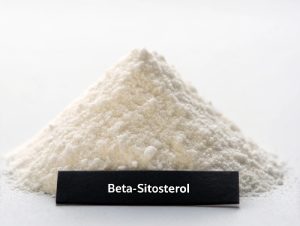
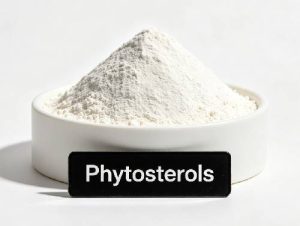
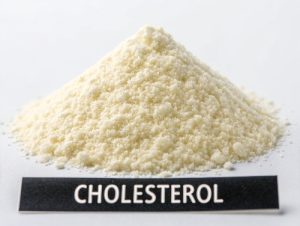
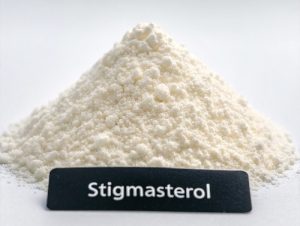
Two pages on this site print CAS 83-46-5. Beta-Sitosterol is the isolate: white to off-white crystals, GC 98% or higher, suggested at 0.5–2.0%. Phytosterols is the group: the page lists β-sitosterol, campesterol, and stigmasterol as key components, oil-soluble powder, suggested at 0.1–5.0%. Matching the CAS and ignoring the INCI is how the blend ships against an isolate line.
The oral-dose split for the isolate is Beta-Sitosterol Powder: CAS 83-46-5, Not a Capsule Dose.
Same CAS, different scoops
| Beta-Sitosterol | Phytosterols | Cholesterol | |
|---|---|---|---|
| INCI | Beta-Sitosterol | Phytosterols | Cholesterol |
| CAS on this site | 83-46-5 | 83-46-5 printed on that page too | 57-88-5 |
| What you are buying | ≥98% isolate | A plant sterol mixture | The animal-structure sterol, ≥98% |
| Suggested use | 0.5–2.0% | 0.1–5.0% | 0.1–2.0%, often cited near 0.5% |
| Where it goes | Hot oil, about 80–90°C | Oil phase, moderate heat | Oil phase; melt near 148°C |
| What 1% is | About 1 kg isolate per 100 kg | About 1 kg of the mixture | About 1 kg cholesterol |
Campesterol and Stigmasterol are named inside the phytosterols specification. Stigmasterol has its own page. Do not peel one name out of the blend and call the whole drum Beta-Sitosterol. If the COA of a “phytosterols” lot shows a sitosterol peak plus other sterols, that is the mixture. The isolate page asks for 98% or higher of beta-sitosterol by GC. A blend that is only partly sitosterol can still be a correct phytosterols delivery and a wrong isolate delivery.
Percents and ratios do not travel
A 100 kg cream at 1.5% beta-sitosterol is about 1.5 kg of the ≥98% powder. The same 1.5% of phytosterols is about 1.5 kg of the mixture, so the sitosterol inside it is only the fraction the blend COA reports. If you needed 1.5 kg of sitosterol and the blend is not 98% sitosterol, you under-dosed the isolate. If you needed the mixture’s 0.1–5% band and you charged 2% of the pure isolate, you did not buy campesterol and stigmasterol.
The sitosterol page’s barrier note is a 3:1:1 molar ratio of Ceramide NP to beta-sitosterol to free fatty acids. The cholesterol page prints its own ratios with ceramide and stearic acid, including figures such as 1:3:1. The phytosterols page says it can sit with cholesterol, not that it replaces it. Three sterol pages, three ratio sentences. Copy the ratio from the INCI you actually ordered.
| Mistake | What arrives |
|---|---|
| CAS 83-46-5 only, no INCI | Either the isolate or the blend |
| 2% “sterol” on a vegan brief that still needs cholesterol | You may have skipped CAS 57-88-5, or you may have used sitosterol as the stand-in without writing that choice |
| Stigmasterol COA against a beta-sitosterol line | Wrong sterol, even if both are plant sterols |
Cholesterol is the skin-identical sterol, CAS 57-88-5. Beta-sitosterol is the plant isolate the page positions when the brief wants a non-animal sterol. Say which one the label will print. “Vegan cholesterol” is a positioning sentence on the sitosterol page. It is not a legal rename of the cholesterol INCI.
How to read the GC before the oil is hot
On the isolate, look for beta-sitosterol at 98% or higher and a short list of impurities. On the phytosterols COA, look for a composition: sitosterol plus campesterol plus stigmasterol, or whatever that lot actually prints. A single CAS line of 83-46-5 on the blend header does not erase the other peaks. If sitosterol is 50% of the blend, 2% of that powder is about 1% sitosterol in the cream, not 2%. Write the composition next to the percent or you will think you matched the isolate.
Melting tells the same story after the fact. This isolate is listed around 136–140°C and is dissolved in oil at about 80–90°C. Cholesterol is listed near 148°C. A powder that will not clear in the sitosterol oil phase may be the wrong sterol, or it may be the right sterol added too cold. Check the INCI before you raise the kettle to cholesterol’s melt and call it a fix.
A 20 kg pilot at 1% isolate is 200 g of ≥98% beta-sitosterol. A 20 kg pilot at 1% phytosterols is 200 g of the mixture. Keep two bags. A shared “sterol” shelf is how the 200 g bags get swapped on a night shift. The label on the bag should be the INCI, not only the CAS.
If both the isolate and cholesterol are in one cream, they are still two melts and two CAS lines. Example only when each TDS agrees: 1% beta-sitosterol is 200 g on that 20 kg pilot, and 0.5% cholesterol is 100 g more. Do not add 300 g of whichever bag is labeled 83-46-5. Cholesterol will not carry 83-46-5. The phytosterols bag might. That is the whole mistake this article is trying to stop. Ceramide NP can sit with either sterol. It does not choose the sterol for you. The INCI on the ceramide line stays Ceramide NP. The sterol line stays the sterol you weighed.
What to send for the sterol you will melt
- INCI Beta-Sitosterol or INCI Phytosterols, not CAS alone
- For the isolate: GC 98% or higher, 0.5–2%, oil phase about 80–90°C
- For the blend: the component list you will accept, and a percent inside 0.1–5% only if that is the SKU
- Cholesterol only if the formula names it, CAS 57-88-5
- COA, SDS, TDS, bench-sample size
Documents for the isolate are on the Beta-Sitosterol product page. The mixture is on the Phytosterols product page. Match the sample to the INCI, then scale. A request that says only “CAS 83-46-5” comes back as a question about isolate or blend. A request that names Beta-Sitosterol and 98% comes back as a powder you can melt.