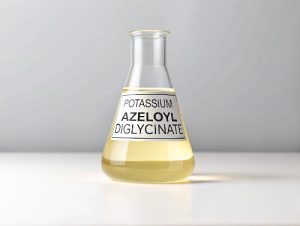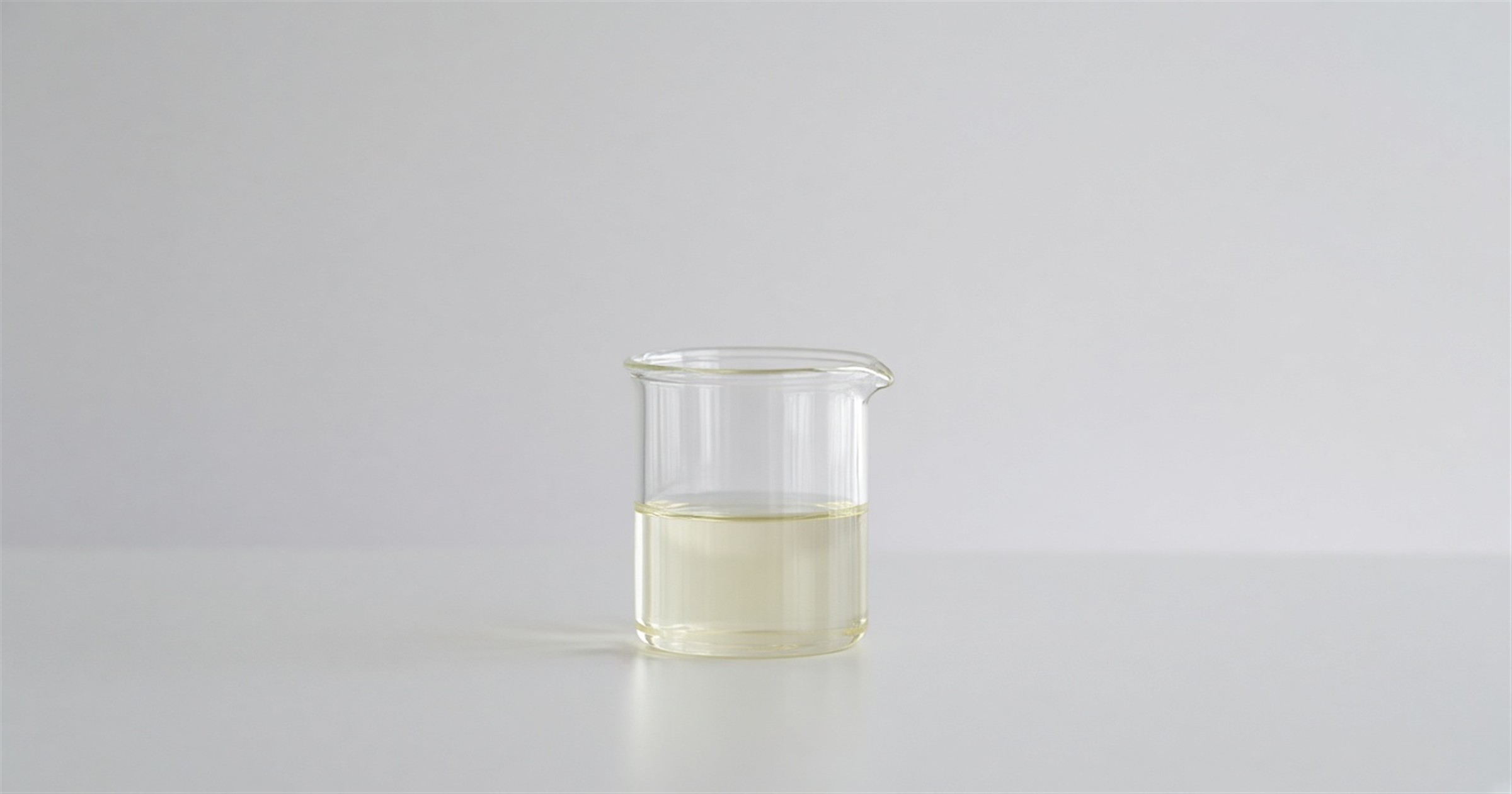
A serum brief that says only “PAD” or “the water-soluble azelaic” is not a sample request. Potassium Azeloyl Diglycinate is one INCI: the potassium salt of azeloyl diglycine, CAS 477773-67-4. On this page it is described as a colorless to pale yellow clear liquid, typically an aqueous solution around 30% active, with a separate purity line of 99% or higher for the neat powder.
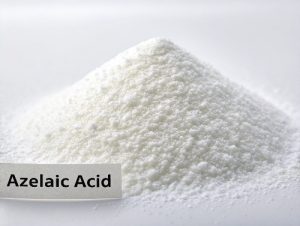
It is not Azelaic Acid. That split is Potassium Azeloyl Diglycinate vs Azelaic Acid Powder. A brand name such as Azeloglicina prints this INCI on the supplier sheet. It does not, by itself, identify the drum in front of you.
What the INCI is locking
PubChem lists the salt as C13H21KN2O6, CAS 477773-67-4, and records Azeloglicina among the synonyms. CosIng-style entries give the function as skin conditioning and the chemical name potassium hydrogen heptylenedicarboxamidodiacetate. “PAD” on a purchase order is only a shorthand. The label line is Potassium Azeloyl Diglycinate.
The molecule is azelaic acid condensed with two glycines and neutralized as the potassium salt. That is why the page calls it water-soluble. It is not a blend you can recreate by stirring azelaic acid powder into a glycine solution in the kettle. Order the finished salt.
Write the INCI you will print. Ask the COA to show Potassium Azeloyl Diglycinate and the active content of the form you bought. CAS 477773-67-4 goes on the file when your pack needs a CAS line.
Thirty percent solution and a neat powder are different percents
Dosage searches, including a bare “5% potassium azeloyl diglycinate,” are a weighing question. The product page sets a typical use of 3% to 10% for the commercial solution, and it gives 30% active as the example of that solution. Three percent of a 30% solution is not three percent of a 99% powder. Ten percent of the solution is about 3% of the salt. Ten percent of the neat powder is a different charge.
The appearance line on this page is the clear liquid. The purity line also mentions 99% or higher for the pure active powder. Treat that as two possible documents, not as one drum that is both. Before the first sample, write which one you mean:
| What you order | What the page states | How to read a formula percent |
|---|---|---|
| Aqueous solution | Colorless to pale yellow, typically about 30% active | The 3–10% window is written for this kind of solution. |
| Neat powder | 99% or higher, if that is the grade on the COA | Do not copy the 3–10% solution band onto the powder until the TDS says the percent is active salt. |
Confirm on the TDS of the lot whether the percent in your formula is as-supplied or as active matter. A supplier who only sells the 30% liquid will not fill a powder line by concentrating the story in the email.
Where the liquid goes
The page describes a water-based liquid that can enter the water phase at any temperature and stay clear from about pH 5 to 11. That is the process note for this grade. It is not a claim that every chassis at pH 11 is a good idea. Match the finished pH to the rest of the formula, then confirm the window on the TDS.
Searches for serum, skincare, and uses are placement questions. The page positions the material for water-based serums, lotions, and treatments aimed at oily or blemish-prone skin, uneven tone, and scalp oils, and for bases such as toners and primers. Those are formula roles. They are not a promise that a lot will even tone, stop redness, or replace a prescription. Keep clinical percentages with the study that published them. For a sample, lock the INCI, the form, and the assay.
“How to use” and “when to use” do not add a second specification. The manufacturing step is still: charge the water phase, name the percent against the form, and check pH. Morning or evening use is a finished-product direction, not a raw-material assay.
Partners stay on their own lines
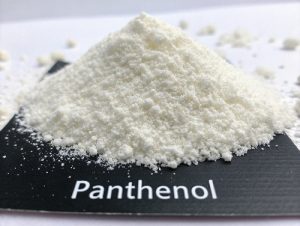
The page names companions, not substitutes. Niacinamide and Tranexamic Acid are the brightening and blemish pair it suggests. Allantoin, Centella Asiatica Extract, and Panthenol are the soothing pair. Each has its own INCI, its own COA, and its own use level. A note that says “do not mix with salicylic acid” or “can I use it with retinol” is a finished-formula compatibility question. It does not let the warehouse replace this salt with either of those materials, and it does not let one COA cover both.
Quote the companions only when the brief already names them. Do not collapse “tone serum” into a single potassium azeloyl diglycinate drum.
What to send before the first sample ships
Put these lines in the message:
- INCI Potassium Azeloyl Diglycinate
- CAS 477773-67-4
- Form: about 30% aqueous solution, or neat powder at 99% or higher, and which one the formula percent refers to
- Use window 3–10% only if you are weighing the solution the page describes
- Target pH, if you need the 5–11 stability note confirmed for your chassis
- Bench-sample size, plus COA, SDS, and TDS
- Any second active by its own INCI, if the brief also names niacinamide, tranexamic acid, or a soothing partner
Batch documents and a sample are on the product page. Match the sample COA to the salt and the active content, then scale. A line that names the solution strength usually returns documents. A line that says only “azelaic derivative, 5%” usually returns a question about which form.