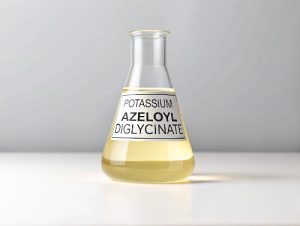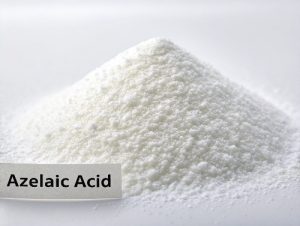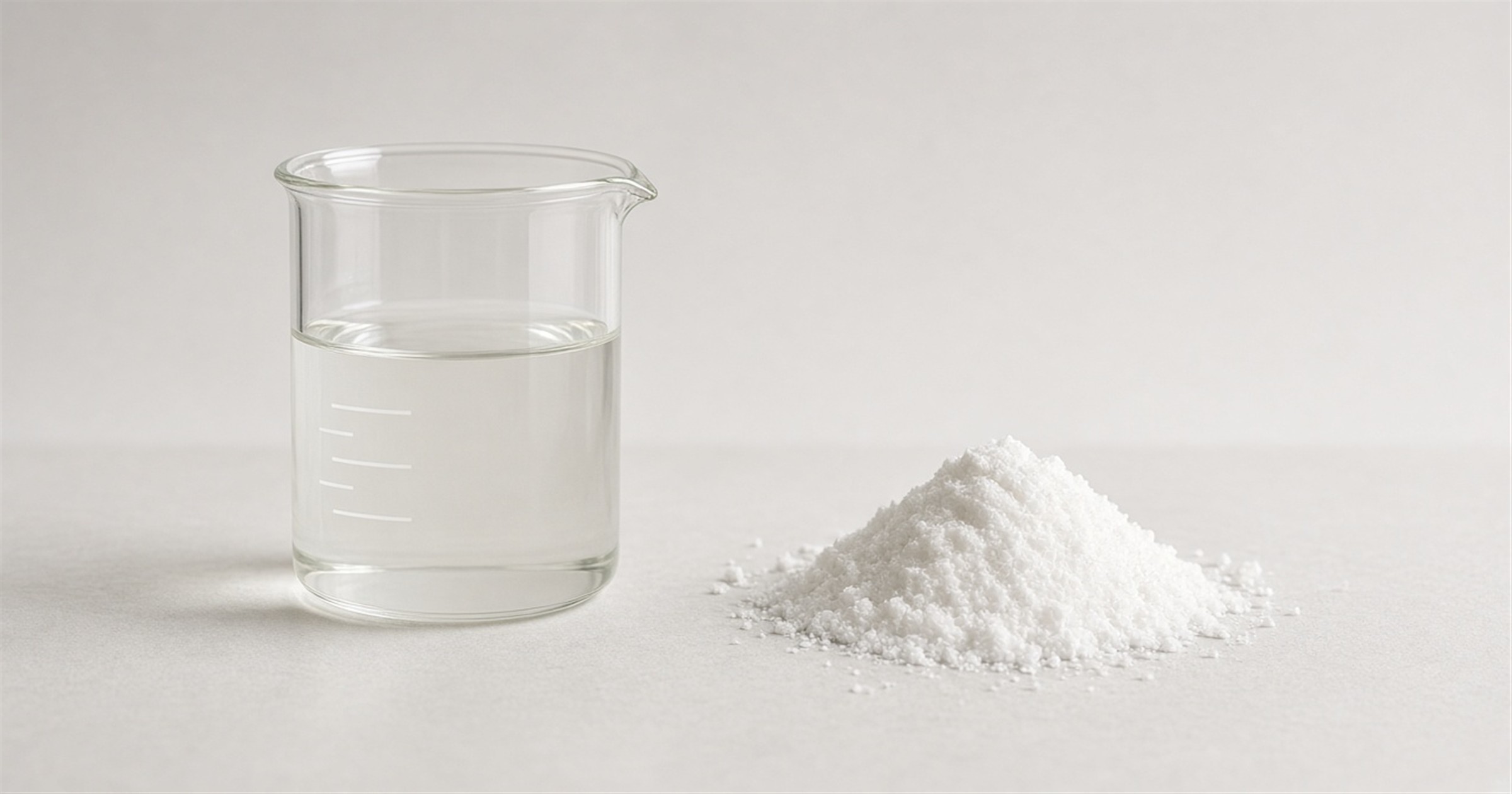
Potassium azeloyl diglycinate vs azelaic acid is an identity question, not a strength ranking. Potassium Azeloyl Diglycinate is the water-soluble potassium salt, sold here as a clear liquid around 30% active. Azelaic Acid is nonanedioic acid, a white crystalline powder at 98% or higher, only sparingly soluble in water. People Also Ask states the same fork as “are they the same?” and “which is better?”. They are not the same purchase line.
The solution-versus-powder weighing for the diglycinate itself is Potassium Azeloyl Diglycinate: 30% Solution or Powder.
Two records, two drums
| Potassium Azeloyl Diglycinate | Azelaic Acid | |
|---|---|---|
| INCI | Potassium Azeloyl Diglycinate | Azelaic Acid |
| CAS | 477773-67-4 | 123-99-9 |
| What it is | Potassium salt of azelaic acid condensed with glycine | The dicarboxylic acid itself |
| Form on this site | Clear liquid, typically about 30% active. A 99% powder is a separate purity line on the same page | White crystalline powder or flakes, 98% or higher |
| Water | Freely soluble | Sparingly soluble, about 0.2%. The page points to ethanol and glycols, with heat |
| Listed use | 3–10% of the commercial solution | 5–20% |
| Process | Water phase, any temperature on this page; stable about pH 5–11 | Not a drop-in water charge. The low water solubility is the process constraint |
A formula written at 10% azelaic acid is not filled by 10% of the 30% diglycinate solution. The salt content would be far lower, and the INCI on the label would be wrong. A formula written at 5% of the diglycinate solution is not filled by 5% azelaic acid powder. The powder will not clear in water the way the solution does.
“Better” is the chassis, not a winner
The comparison searches ask which is better, which is stronger, and whether the diglycinate is as effective. Those questions mix a raw-material choice with a finished-product result. On the documents in front of you, the choice is practical.
Choose the diglycinate solution when the brief needs a clear water phase, a glycine-modified salt, and the 3–10% solution window. Choose the azelaic acid powder when the brief names Azelaic Acid, can carry a glycol or a hot process, and is written against the 5–20% band on that page. Neither page authorizes a claim that one lot will outperform the other on tone, blemishes, or redness. Those results stay with the finished formula and the test that measured them.
Prescription strength, a dermatologist’s brand, and “does it cause purging” are the same kind of question. They describe a product someone already uses. They do not change CAS 477773-67-4 into CAS 123-99-9. If the brief is a leave-on that must say Azelaic Acid, order the powder. If it must say Potassium Azeloyl Diglycinate, order the salt.
Azeloglicina names the salt, not the acid
PubChem lists Azeloglicina as a synonym of potassium azeloyl diglycinate. Sinerga’s page for that trade name prints the INCI Potassium Azeloyl Diglycinate, a clear liquid, and a 3–10% use range. That is a branded grade of this salt. It is not a grade of azelaic acid, and it is not proof that the liquid on this site is that brand.
When a brief says Azeloglicina, ask for the INCI and the active percent on the COA. Accept the material only when both match Potassium Azeloyl Diglycinate and the solution strength you specified. Do not relabel an azelaic acid flake with the trade name because both are discussed for oily skin.
What to send for the INCI you need
For the diglycinate:
- INCI Potassium Azeloyl Diglycinate, CAS 477773-67-4
- About 30% solution, or neat powder if the COA is the 99% grade
- Formula percent marked as solution or as active salt
- COA, SDS, TDS, and bench-sample size
For the acid, use the other product page:
- INCI Azelaic Acid, CAS 123-99-9
- Powder or flakes, 98% or higher
- The 5–20% band, and the solvent system if the powder must be dissolved
- COA, SDS, TDS, and bench-sample size
Diglycinate documents are on the Potassium Azeloyl Diglycinate product page. Azelaic acid documents are on the Azelaic Acid product page. Match the sample to the column you specified, then scale. A line that says “azelaic, whichever dissolves” comes back as a question. A line that names the salt or the acid comes back as a drum you can weigh.