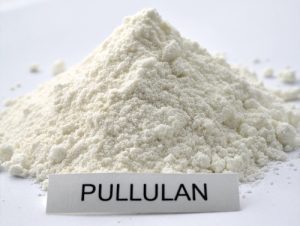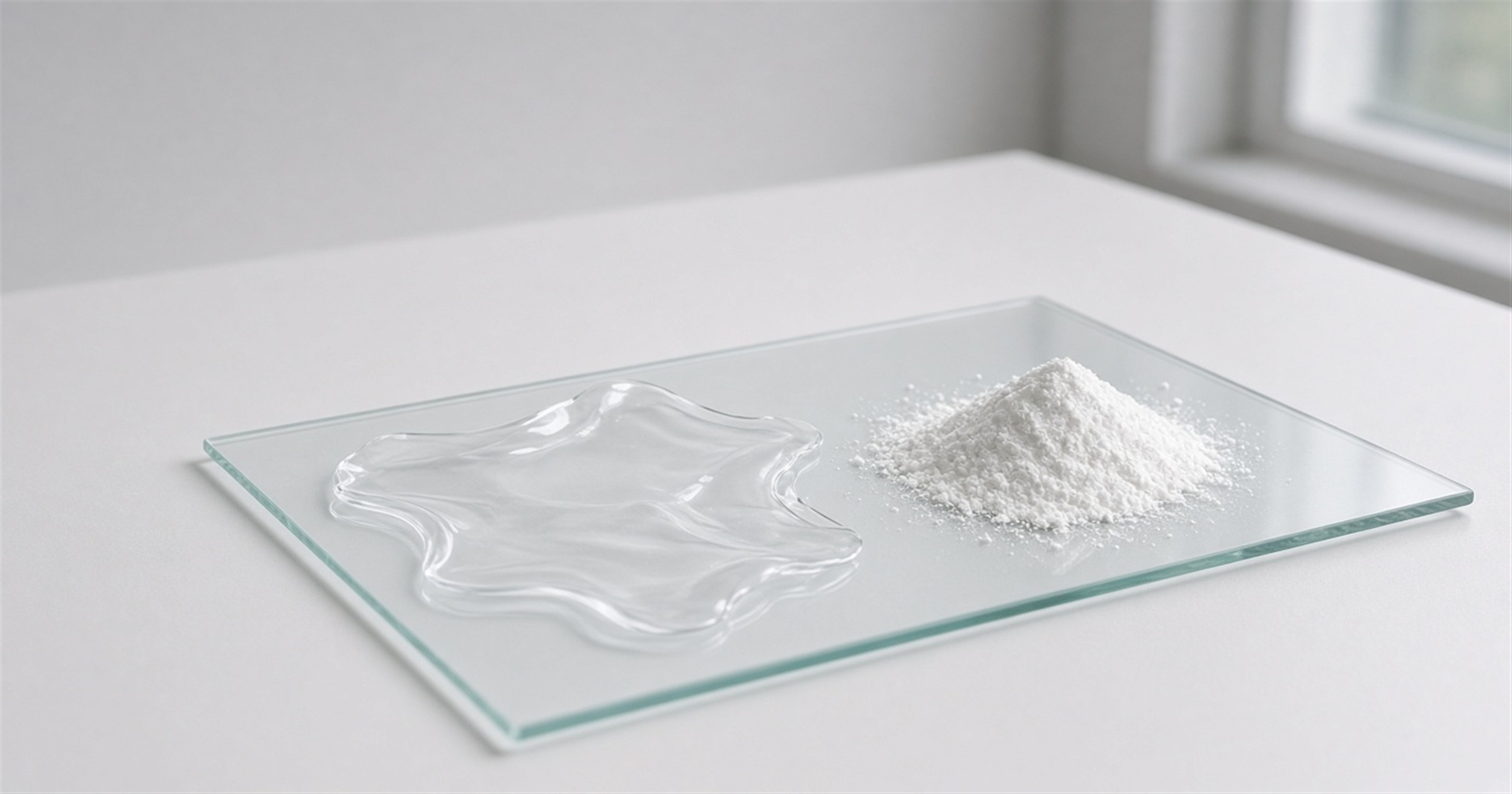
“What is pullulan in skincare?” and “what is it used for on skin?” are placement questions. Pullulan is a water-soluble polysaccharide that dries to a clear film. CosIng lists binding and film forming, not thickening as the inventory function. The tightening people notice is the film contracting as water leaves. It lasts until the film is washed or rubbed off. It is not a claim that the powder remodels skin.
The powder-versus-capsule gate is Pullulan Powder for Skin Is Not That Capsule Shell.
What the film is deciding
The product page suggests 1.0% to 5.0% when the brief wants a tightening effect you can feel. That band is for this powder as supplied. At the low end you are adding a light film and some slip. At the high end the film dominates the afterfeel and can feel tight if nothing else plasticizes it. Write the percent you will actually panel. Do not call every charge “instant lift” and then weigh 0.2% because that is what you use for a gum.
Makeup primers and long-wear products use the same film as a binder: pigment stays put because a continuous layer is holding it. A serum uses it when the brief wants that surface tension in a water phase. Both are still INCI Pullulan. They are not two grades unless the COA says so. Say which chassis you are trialing so the sample size matches.
“Pullulan benefits” on a suggest list does not add a second mechanism. Keep branded clinical percentages with the finished product that published them. For a raw-material sample, lock the INCI, the assay, and the film percent.
The film is a dry-down effect. A wet slide of the serum will not show it. Panel after the water has left the surface. If the brief says “instant tightening” and the only check was the bulk viscosity in the beaker, you measured the wrong thing. Pullulan can add some body in solution and still be there for the film. The decision you are buying is the film after drying, not a gel strength number.
| Chassis | What 1–5% is doing | What to write on the sample request |
|---|---|---|
| Water serum | A light to firm surface film as the serum dries | The percent you will panel, inside 1–5% of this powder |
| Eye or face cream | The same film in a heavier base; high charges can feel tight | Whether a lower end of the band is the trial |
| Primer or long-wear color | Binder for pigment, not a biological active | That the trial is color, so the sample size matches a grind |
| Mask that is peeled or rinsed | A film that has to survive water or be lifted off | Rinse-off versus leave-on. Do not assume 5% belongs on a rinse-off |
Tightness at the top of the band is a dose and plasticizer question. It is not proof the lot is the wrong polymer. If 5% feels too tight, try a lower percent in the same 1–5% window before you change the INCI. If 1% leaves no film the brief asked for, you are still inside the page’s band. Say which end you are testing.
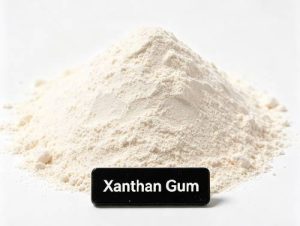
Do not weigh it as xanthan
Xanthan Gum is a thickener. A little of it builds yield and holds particles. Pullulan solutions stay relatively thin for the amount of polymer you add, which is why a film-former charge can sit at several percent without turning the serum into a gel. Trade sheets on cosmetic pullulan describe that lower viscosity on purpose. Use it when you want the film. Keep xanthan, or another thickener, when you want the gel. This site’s xanthan page is the thickener line. Do not invent a second pullulan URL to cover the gum.
| Pullulan on this page | Xanthan Gum on this site | |
|---|---|---|
| INCI | Pullulan | Xanthan Gum |
| Job in the chassis | Film after dry-down; some body | Thickening and suspension |
| Typical charge people copy by mistake | 1–5% film | A few tenths of a percent as a gum |
| What goes wrong in the swap | 0.3% pullulan may not give the film the brief asked for | 3% xanthan is a different texture and a different INCI |
Google Suggest also shows “ultratex vs xanthan.” That pair is not pullulan. Do not answer it with this powder.
High shear still matters. The pullulan page says to hydrate the powder in the water phase under high shear so it does not clump. A thin polymer that fisheyes is a dispersion failure. It is not evidence that you needed xanthan instead.
When the chassis needs both, they are two lines. A 100 kg batch at 3% pullulan and a separate xanthan charge is about 3 kg of this powder plus whatever the gum’s own TDS allows. Do not fold the gum into the 3 kg. Do not drop pullulan to 0.3% because that is where the gum sits. Hydrate pullulan in the water until it is clear, and disperse the gum by its own method. Electrolytes are listed as compatible on the pullulan page. That note does not cancel a xanthan salt limit. Check the gum’s sheet separately.
A silent swap is easy to see on the INCI list after the bench. Pullulan on the label and xanthan in the kettle is the wrong film. Xanthan on the label and pullulan in the kettle is the wrong gel. “Polysaccharide” on a ticket is not a specification.
Where it sits next to other actives
The page says the powder is compatible with electrolytes and with most cosmetic actives, and that it can sit next to peptides when the brief wants both an immediate film and a separate biological active. “Peptides” is not an INCI. Name the peptide you will actually buy, on its own product page, with its own percent and COA. Pullulan does not replace that peptide, and the peptide does not form this film.
pH on the page is about 3 to 9, with heat stability under normal processing. Confirm the window on the TDS. A film former that survives the kettle can still look hazy if it was never fully hydrated.
A batch you can actually weigh
A 100 kg batch at 1% of this powder is about 1 kg of pullulan. The same batch at 4% is about 4 kg. A 200 g bench at 3% is 6 g of powder. Those numbers are the film former, as supplied. They are not a count of empty capsules, and they are not a 0.3% xanthan charge renamed.
Hydrate the powder in water before the oil phase goes in. A small slurry, then the rest of the water under high shear, is the usual way to avoid grains. Dumping several percent onto an already thick cream leaves dry specks. Specks are undispersed powder. They are not a sign that the INCI was wrong.
What to send for the film you will panel
- INCI Pullulan, CAS 9057-02-7
- Fine powder, 99% or higher
- Percent as supplied inside 1–5%, and whether the trial is a serum, a mask, or a primer
- Water-phase high-shear addition
- A separate line if a thickener such as xanthan is also in the chassis
- COA, SDS, TDS, and bench-sample size
Documents and a sample are on the Pullulan product page. Match the sample to the powder assay, then scale. A request that says only “the tightening ingredient” comes back as a question. A request that names Pullulan and the film percent comes back as a powder you can weigh.