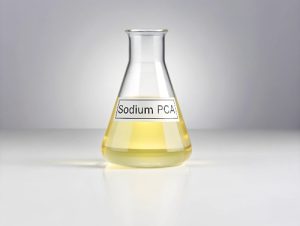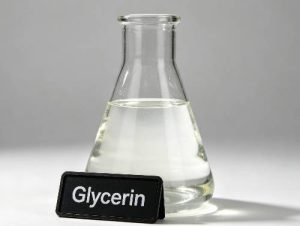
Sodium PCA vs glycerin is a humectant question with two different chemicals. Sodium PCA is the sodium salt of pyrrolidone carboxylic acid, typically a 50% solution. Glycerin is the polyol, a clear viscous liquid at about 99.5% or higher. Both can enter the water phase. Neither fills the other’s line.
The assay and the dry-basis trap for the salt are Sodium PCA Humectant: 50% Solution or 99% Dry Basis. The lactate salt people pair with both of these is Sodium PCA vs Sodium Lactate: Not the Same Humectant.
What each page is selling
| Sodium PCA | Glycerin | |
|---|---|---|
| INCI | Sodium PCA | Glycerin |
| CAS | 28874-51-3 | 56-81-5 |
| What it is | Sodium salt of PCA, described as an NMF humectant | A polyol humectant and water-phase solvent |
| Form on this site | Colorless to pale yellow liquid, typically 50% | Clear, colorless to nearly colorless viscous liquid |
| Assay | 50% as solution; 99% or higher on a dry basis | 99.5% or higher, typical cosmetic grade |
| Listed use | 1–5% of the 50% solution | 1–10% in most leave-on skin care; higher levels are called out as a stickiness check |
| Water | Freely soluble. Water phase at any temperature | Miscible with water and ethanol. Hygroscopic |
Five percent of the sodium PCA solution is not five percent glycerin. The polyol charge is nearly neat. The PCA charge is half water before it ever meets the kettle. A formula that swaps them to “keep the humectant at 5%” changes both the INCI and the solids.
The product page for sodium PCA emphasizes a fresh, less tacky feel. The glycerin page tells you to watch stickiness as the level rises. That is a sensory reason to keep both names on the brief when you want the polyol’s solvent job and the salt’s NMF job. It is not a reason to delete one and rename the drum.
Sodium hyaluronate is a third humectant
People Also Ask often leaves this comparison and asks whether sodium hyaluronate is better than hyaluronic acid. That pair is not sodium PCA, and it is not glycerin. Sodium Hyaluronate on this site is a white powder, CAS 9067-32-7, with a molecular-weight range you have to specify, used around 0.1–2%. A powder that forms a gel is a different weighing problem from either liquid.
If the brief says “humectant,” write which of the three INCIs you mean. Quote sodium hyaluronate only when you also name the molecular-weight band. Do not let a hydration claim collapse the salt, the polyol, and the powder into one SKU.
Use both only when the brief names both
Glycerin does a solvent job the PCA salt does not. It carries water-soluble extracts and can change how thick a water phase feels. Sodium PCA does not replace that solvent just because both are called humectants. If the chassis needs the polyol to dissolve something, keep glycerin on the formula and add the PCA solution only for the salt. If the chassis is already soft enough and the brief only asked for an NMF salt, do not add glycerin to “make the humectant higher.”
A worked weighing makes the difference obvious. A 100 kg batch at 4% of the 50% sodium PCA solution contains about 2 kg of the salt and about 2 kg of the water that came in the jug. The same 100 kg batch at 4% glycerin contains about 4 kg of polyol. Those are not alternate ways to hit “4% humectant.” Write the percent next to the INCI, then ask the COA to show the assay you used.
What to send
For sodium PCA:
- INCI Sodium PCA, CAS 28874-51-3
- 50% solution, and a formula percent that says “as supplied”
- COA, SDS, TDS, and bench-sample size
For glycerin, use the other page:
- INCI Glycerin, CAS 56-81-5
- Grade at 99.5% or higher if that is your spec
- The 1–10% band, or a note if you intend to go higher and have checked feel
- COA, SDS, TDS, and bench-sample size
Sodium PCA documents are on the Sodium PCA product page. Glycerin documents are on the Glycerin product page. Match each COA to its INCI, then scale. A line that says “glycerin or PCA, whichever hydrates” comes back as a question.