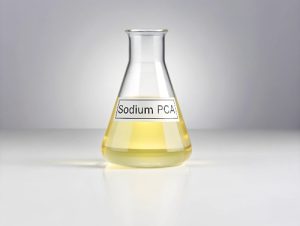
Sodium PCA vs sodium lactate is a blend question that gets collapsed into “the sodium humectant.” Sodium PCA is the sodium salt of pyrrolidone carboxylic acid, CAS 28874-51-3, typically a 50% solution. Sodium lactate is the sodium salt of lactic acid. Both can be described as moisturizing salts. They are not interchangeable on a label or on a COA.
The solution assay for this salt is Sodium PCA Humectant: 50% Solution or 99% Dry Basis. The polyol people swap in the same water phase is Sodium PCA vs Glycerin: Two Water-Phase Humectants.
Same sentence in a brief, different INCI
An NMF-style chassis often lists several water binders together: a PCA salt, a lactate, amino acids, sometimes a polyol. The product page for sodium PCA points in that direction. It suggests pairing the solution with amino acids such as serine, glycine, and proline, and with sodium lactate, when the brief wants a broader moisturizing-factor mix. That sentence is a pairing note. It is not permission to ship sodium PCA against a line that says sodium lactate.
This site has no sodium lactate page. Do not invent a URL. If the formula names sodium lactate, source that INCI on its own. If the formula names Sodium PCA, use this page. If it names both, send two requests. One “sodium moisturizer” SKU will satisfy neither COA.
| Sodium PCA, this page | Sodium lactate | |
|---|---|---|
| INCI | Sodium PCA | Sodium Lactate |
| CAS on the documents you can open here | 28874-51-3 | Not sold on a page here. Do not copy 28874-51-3 onto it |
| Form | Typically a 50% aqueous solution | Often also a solution in the trade. The percent is still that supplier’s assay, not this one |
| Listed use here | 1–5% of the 50% PCA solution | No use band on this site. Do not reuse 1–5% as if it were the lactate specification |
A 50% PCA solution and a 60% lactate solution, or whatever strength the lactate supplier prints, cannot share a weighing factor because the name on the drum changed. Ask each COA for active content. Then write the formula percent against that content.
A list of moisturizing factors is not one percent
The sodium PCA page names serine, glycine, and proline next to sodium lactate when it describes a broader moisturizing blend. Those amino acids are not this salt either. This article does not assign them URLs or use levels. If the brief prints a string of NMF names, each name is its own line and its own assay. Copying the 1–5% solution band onto every name in that string is how a lactate drum gets weighed like a PCA jug.
You can still buy the PCA solution while the lactate is sourced elsewhere. Put both names in the formula record so the plant does not treat the second salt as optional. When the lactate COA arrives, read its active content before you scale. Until that sheet exists, leave the lactate percent blank. Do not borrow 50% from this page to fill the blank.
What “substitute” does not mean
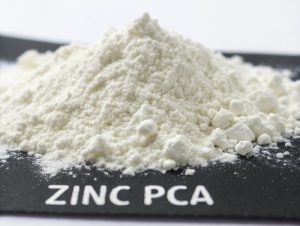
Suggest lists also ask for a sodium PCA substitute. A substitute is a formula decision after you have named the original INCI. Glycerin can sit beside this salt. Zinc PCA is a different cation, CAS 15454-75-8, sold as a powder. Sodium lactate can sit beside this salt when the brief already includes it. None of those is a silent rename.
The CIR review that covers sodium PCA also covers the free acid and other PCA salts. It concludes they are safe in the present practices of use and concentration, and that they should not be used where N-nitroso compounds can form. That family conclusion does not merge sodium lactate into the PCA group. Lactate is outside that assessment. Safety language for one salt does not clear the other, and it does not let you skip the INCI.
What to send when the brief says both
For this salt:
- INCI Sodium PCA, CAS 28874-51-3
- 50% solution, percent marked as supplied
- COA, SDS, TDS, and bench-sample size
For sodium lactate, write a separate line to whoever supplies it:
- INCI Sodium Lactate
- The solution strength on that supplier’s COA
- Do not attach this site’s PCA documents to that line
Sodium PCA documents are on the product page. Match the sample to CAS 28874-51-3 and the 50% solution, then scale. A moisturizing-factor brief that names both salts should leave here with one sample, not with a drum labeled as both.