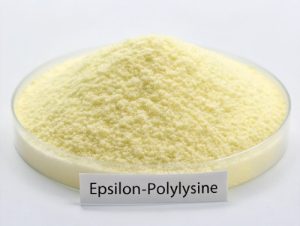
People Also Ask does not treat “epsilon polylysine” as a finished INCI. The first-circle branches ask what poly-L-lysine is for, how to coat culture plates, and what the CAS number of L-lysine is. Those are three different purchases. Epsilon-Polylysine on this site is a fermentation homopolymer sold as a white to pale yellow hygroscopic powder, assay 98% or higher, CAS 28211-04-3.
It is not the α-linked culture-coating polymer that catalogs list as poly-L-lysine. It is not the free amino acid L-lysine in a supplement bottle. The salt-versus-free-form weighing sits in Epsilon-Polylysine Hydrochloride vs Free-Form Assay.
What the INCI is actually printing
CosIng-style entries register the cosmetic name as POLYEPSILON-LYSINE, CAS 28211-04-3, CosIng reference 58349, with the IUPAC-style description poly[imino[(2S)-2-amino-1-oxo-1,6-hexanediyl]]. Listed functions are hair conditioning, skin conditioning, and emulsifying surfactant. The product page also prints Epsilon-Polylysine and Polyepsilon-lysine on the same specification. Write the INCI you will put on the label. Ask the COA to show that string, not a laboratory synonym.
The polymer is ε-poly-L-lysine: L-lysine residues joined through the side-chain amino group, typically about 25–35 units when it is made by Streptomyces albulus fermentation. That ε-amide backbone is why the chain stays strongly cationic in water. α-Polylysine, the synthetic coating polymer, uses the α-amino linkage instead. The two names share “lysine” and a positive charge. They do not share a manufacturing route, a molecular-weight distribution, or an INCI. Trade sheets that register the α-polymer as POLYLYSINE are describing the other material. This site has no POLYLYSINE page. Do not invent a URL, and do not accept a cell-culture bottle against a cosmetic Polyepsilon-Lysine line.
CAS 28211-04-3 belongs to the ε-polymer record used on this page. People Also Ask’s “CAS number for L-lysine” is a monomer question. Copying an amino-acid CAS onto this powder is how a warehouse files the wrong SDS.
What the powder is doing in a formula
Inventory language is conditioning and emulsifying. The product specification positions the same powder as a cationic antimicrobial polymer for water-based systems that want a fermentation-derived option instead of a classic synthetic preservative package. Those are two ways of describing one SKU. Neither sentence authorizes a finished-product claim that a lot will clear acne, “balance the microbiome,” or let you print preservative-free without a challenge test.
Suggested use on the product page is 0.01% to 0.5%, with 0.1% named as a typical preservative-booster level. That band is written for the 98% powder as supplied, not for a 25% liquid or a 50% dextrin cut. One-tenth of a percent of a neat powder is not one-tenth of a percent of a diluted grade. Confirm on the TDS whether the percent is as-is or as active polymer.
The powder is highly water-soluble and only slightly soluble in ethanol. It can enter the water phase at any manufacturing stage. The page lists heat stability up to 120°C for the polymer and 80°C during a standard emulsification, and activity across about pH 2.0 to 9.0. Match kettle temperature and finished pH to the TDS of the lot you buy. Hygroscopic powder cakes if the drum sits open. A caked sample is usually moisture pickup, not a wrong INCI.
Oral questions on the same People Also Ask cluster — belly fat, kidneys, collagen versus L-lysine, “is L-lysine antibacterial” as a supplement — are finished-nutrition questions. They do not change the assay on this drum. Food-preservative listings for ε-polylysine are a different regulatory file from a cosmetic INCI. Do not paste a food-use limit onto a serum kettle sheet.
Cationic polymer, anionic chassis
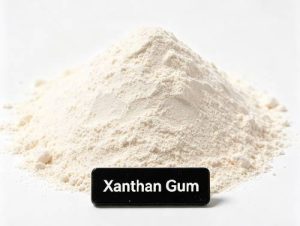
Because the chain is cationic, the product page warns against anionic surfactants such as SLS and SLES, and against anionic thickeners such as carbomer and Xanthan Gum. Precipitation is a process failure, not a “weak lot.” This site has no carbomer page and no SLS page. Do not invent those URLs. If the brief already names xanthan, treat that as a compatibility check on the TDS, not as permission to throw both powders into one water phase and hope the gel stays clear.
The same page points to non-ionic thickeners such as hydroxyethyl cellulose, or to a cationic thickener, when you still need viscosity. Those remain separate purchase lines. Write the thickener INCI on the inquiry if the chassis cannot move off xanthan or carbomer; otherwise the first sample often comes back as a haze report instead of a COA question.
Partners stay on their own COAs
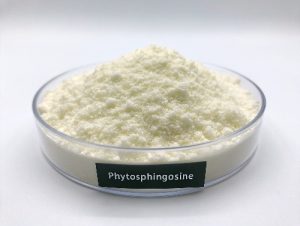
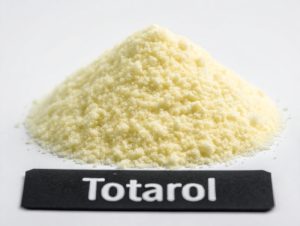
The specification suggests Phytosphingosine when the brief wants a barrier lipid next to this polymer, and Totarol when it wants a second, oil-soluble antibacterial line for an acne-positioned chassis. Each has its own INCI, solvent, and use band. Phytosphingosine is not water-soluble the way this powder is. Totarol is not a 0.1% water-phase charge. Quote them only when the formula already names them.
Phenoxyethanol is a different preservative chemistry, typically used around 0.3–1.0% in systems that have already been challenged. A “natural preservative” brief that says “use epsilon-polylysine instead” is still two INCIs. Do not ship this powder against a line that prints Phenoxyethanol, and do not treat 0.1% of this polymer as a silent 1% phenoxyethanol replacement. Challenge testing belongs to the finished formula.
What to send before the first sample ships
Put these lines in the message:
- INCI Polyepsilon-Lysine (Epsilon-Polylysine on this page), not POLYLYSINE, not L-lysine
- CAS 28211-04-3
- Form: hygroscopic powder, assay 98% or higher, and whether that figure is free polymer or the hydrochloride
- Use window 0.01–0.5% as supplied, and whether 0.1% is the booster level you will weigh
- Water-phase addition; kettle temperature if you need the 80°C emulsification note confirmed
- Thickener INCI if the chassis currently uses xanthan, carbomer, or an anionic surfactant
- Bench-sample size, plus COA, SDS, and TDS
Batch documents and a sample are on the product page. Match the sample COA to the INCI and the assay, then scale. A line that names Polyepsilon-Lysine and the powder strength usually returns documents. A line that says only “polylysine, the antibacterial one” usually returns a question about which polymer.